The Boomer Woman's Podcast

The Boomer Woman’s Podcast, episode 350

The Boomer Woman's Podcast
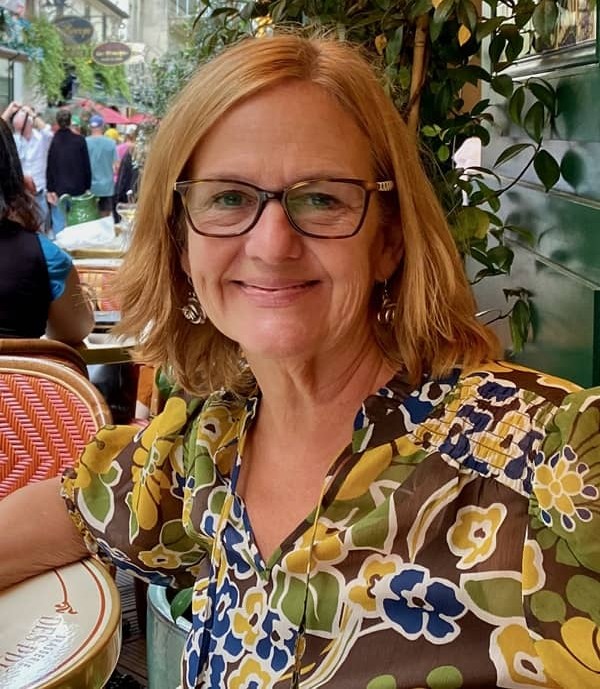
Headshot of author and retired history teacher Lee Knapp smiling at the camera.

Lee Knapp: From Accommodation to Authenticity

What if growing older isn’t about reinventing yourself—but uncovering who you’ve been all along?

Lee Knapp spent decades teaching history before realizing that her own life had become one of the most meaningful lessons she could ever tell. Returning to teach at the diverse high school she once attended challenged lifelong assumptions about race, faith, relationships, and identity. Along the way she also navigated divorce after thirty-two years of marriage, rediscovered her independence, and unexpectedly found love again.

In this thoughtful conversation, Lee and Agnes explore the quiet courage required to question long-held beliefs, confront family history honestly, and embrace the freedom that often arrives later in life.

This episode is ultimately about one of the greatest gifts of aging: becoming more completely yourself.

  • Becoming rather than reinventing
  • Accommodation versus authenticity
  • Returning to teaching after decades away
  • Race, identity and personal growth
  • Faith and spiritual freedom
  • Family history and honest reflection
  • Divorce and rebuilding life
  • Purpose in retirement
  • Late-life companionship
  • Remaining curious throughout life

Note: This conversation includes thoughtful discussion of race, religious authority, divorce, family dynamics, and historical injustice. While approached with warmth and hope, some listeners may find parts emotionally reflective.

Listen below and then share this episode!

Want to be a guest on The Boomer Woman’s Podcast? Send Agnes a message on PodMatch, here: Agnes on PodMatch

Subscribe where you listen:

About the guest: Lee Knapp

My name is Lee Knapp. I’m a recently retired public school history teacher and the author of I’m History…but do I repeat myself? — a memoir about returning to teach at my alma mater, Tucker High School in Richmond, Virginia. When I graduated in 1976, Tucker was nearly all white. By the time I came back, it was one of the most diverse schools in the state — more than 37 languages spoken, roughly equal numbers of Black and white students — all of this in the former capital of the Confederacy. Tucker stopped being just a workplace. It became a lens for looking at racial evolution, American pluralism, and what real diversity actually costs and requires. When you read about particular students — their immigrant stories, their humor, their specific lives — the abstraction of “othering” collapses. That’s one of the things this book does.

The memoir moves through four interlocking sections: faith and spiritual liberation; marriage, divorce, and late-life romance; Southern identity; and racial reckoning. My personal story runs parallel to history throughout. My old evangelical church mirrors Puritan theocracy. My marriage’s collapse echoes patterns of accommodation and denial. Coming to terms with my grandmother’s white supremacy connects directly to Virginia’s Massive Resistance and to what’s happening now.

My spiritual arc started with a genuine conversion at fifteen and got corrupted by a controlling pastor in a charismatic church during college in Williamsburg, Virginia. He preached conservative politics from the pulpit; these were the early days of the Religious Right, the Moral Majority, and Pat Robertson. After he accused me of harboring “the spirit of Jezebel” at a seafood buffet and demanded I name other dissenters, I started looking for the exit. I draw parallels to Anne Hutchinson and praise Roger Williams’s idea of “soul liberty” as the historical root of American religious freedom. That section rhymes hard with this moment, as Twain would say — because many people are still leaving evangelicalism, or doubling down on it.

The pivot of the book is my 2003 return to Tucker. Students like Abdul, whose uncles flew from Pakistan over a report card; Kosal, whose uncle survived a Cambodian killing field by lying motionless among corpses; and Farid, whose Bahai family fled Iran on horseback. They were everything the Richmond I’d grown up in was not. Recounting a student asking me, haltingly and honestly: “So, Ms. Knapp, so what specifically did white people hate about Black people?”, I quote the openly racist writings of famous editor James J. Kilpatrick. The resemblance to some of today’s worst voices is not subtle.

I also write about thirty-two years of marriage that ended in a devastating decision, and then the unexpected part: a late-life romance with a widowed fellow history teacher that started when we both skipped a pep rally and landed in a local bar. Ten months of great Friday conversations, no physical contact. Finally, on a June night after his retirement speech, we ended up in bed, fully clothed. His only request: “Leg.”

The memoir’s most historically urgent section confronts my grandmother Mema and the mythology I had created of her small North Carolina town. She was someone I admired and loved completely. She was also someone who enthusiastically went to view the mutilated bodies of two Black men lynched by a white mob in January 1921. Drawing on James Baldwin, C. Vann Woodward, and King’s “Letter from Birmingham Jail,” I had to sit with the fact that loving your family — or your country — requires honest confrontation with what they’ve done.

The book ends with a hopeful classroom scene in the new Tucker, a diverse group of seniors listening to and applauding each other’s futures. The title’s double meaning resolves there: history does repeat itself in patterns of spiritual authoritarianism, racial injustice, and personal accommodation. But individuals can break those patterns — through self-examination, humor, and a genuine willingness to change.

Visit Lee Knapp’s websites:


Find Lee on Social:
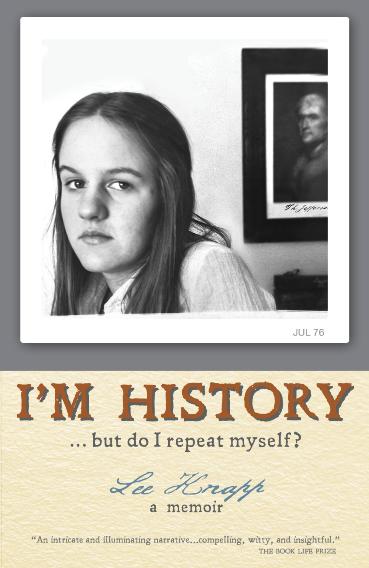
      Lee Knapp book I'm History

      Stay in the Conversation

      Occasional reflections, new conversations, and ideas about what comes next. →

      0 Comments

      Submit a Comment

      Your email address will not be published. Required fields are marked *

      Continue your journey…

      • If you’re exploring your own identity and family history: Al Isaacs

        If you’re rethinking the stories you’ve inherited: Jodi Vandenberg-Daves

      • If you’re discovering who you’re becoming after life’s unexpected turns: Karen Anne Coccioli
      Verified by MonsterInsights